
Case Study
Eileen Fisher: A holistic circular approach
Created by
Redress
,
2022
Quick Access
Learn more fashion industry terminology from the Glossary.
Quick Access
Learn more fashion industry terminology from the Glossary.
American designer Eileen Fisher started her namesake womenswear brand in 1984 as a result of her own frustrations in trying to find the right clothing for herself. Eileen created a brand based on quality fabrics in a range of great colours, with classic flattering shapes and a strong focus on their ability to be worn together easily. The company’s vision is rooted in sustainable actions within the supply chain to ensure the production leaves minimal impact on the environment, ensures the garment workers worldwide are fairly compensated, and that her customers are made aware of the importance of garment longevity.
In this case study, we explore how Eileen Fisher incorporates multiple circular fashion strategies to ensure their products stay in use as long as possible. From listening to consumer feedback to inform design, to taking up the responsibility to educate consumers about garment care and offering repair services, Eileen Fisher encourages consumers to reconsider the value of used garments.
Eileen Fisher’s holistic approach is reflected in the company’s design thinking methods, which pay close attention to their customer. “Design is what drives us and our business. We find that good design is a result of paying attention to what women want and need. The women who wear our clothes want to experience the magic that happens when you put on a piece of clothing that has been pared to its simple, pure essence. It comes alive on your body. It makes you move differently. It changes the way you think and feel about yourself.” In order to support this vision, the team relies on research and product development, together with building strong partnerships with suppliers who can provide quality materials and workmanship.
Designing based on user feedback
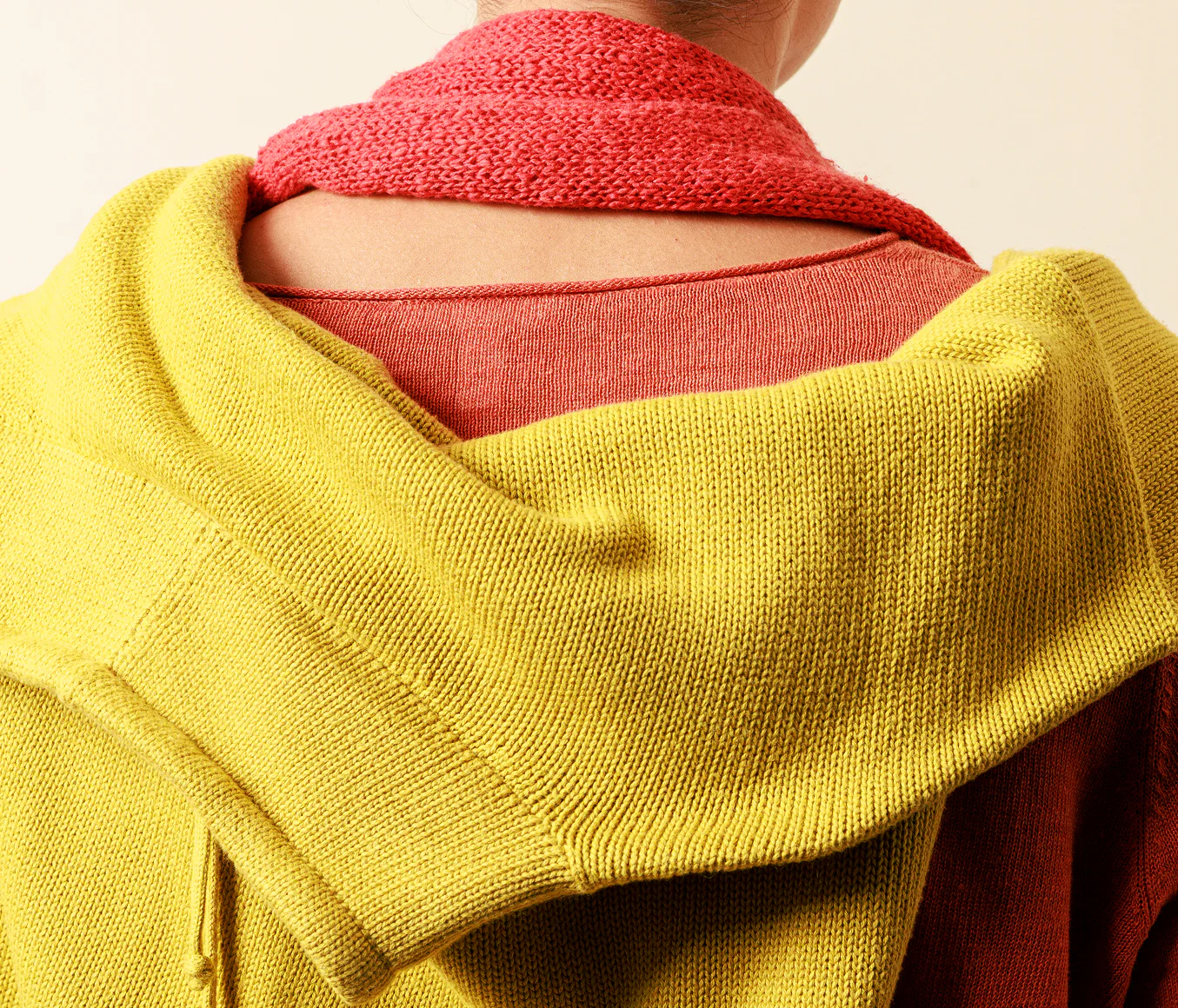
Among their Vision 2020 goals, Eileen Fisher has pledged to use more sustainable fibres in collections, including organic cotton, linen, and responsibly sourced wool. With the mission to improve the quality of their products down to every detail to withstand wear and tear, the design team fits the samples to real women multiple times to ensure best fit and strong construction detailing.
Credit: Eileen Fisher
Through their garment collection programme, ‘Renew’, the team studies Eileen Fisher items that have been returned by customers, taking note on performance wear and tear, as well as how the construction has held up. This insight is then reviewed and incorporated by the design team when developing new garments — for example, the designers may rethink details such as which seams are most suitable for a certain type of garment. The durability of seams can vary depending on the type of textile and fibre, and selecting the right type can be a key to increased longevity. Shown here are four types of durable seams used by the Eileen Fisher design team, from top left going clockwise: busted seam, clean seam, french seam and flat felled seam.
Educating about garment care
Knowing very well that once the product is purchased, garment care and repair are vital to extend its lifespan, the Eileen Fisher website includes guides on how to hand-wash knitwear and how to launder at home in a more environmentally conscious manner. To extend the life of their garments further during usage, the company also offers a free repair service even for small tasks, such as replacing missing buttons or darning moth-eaten sweaters, in order to keep their garments in active use.
Revaluing products
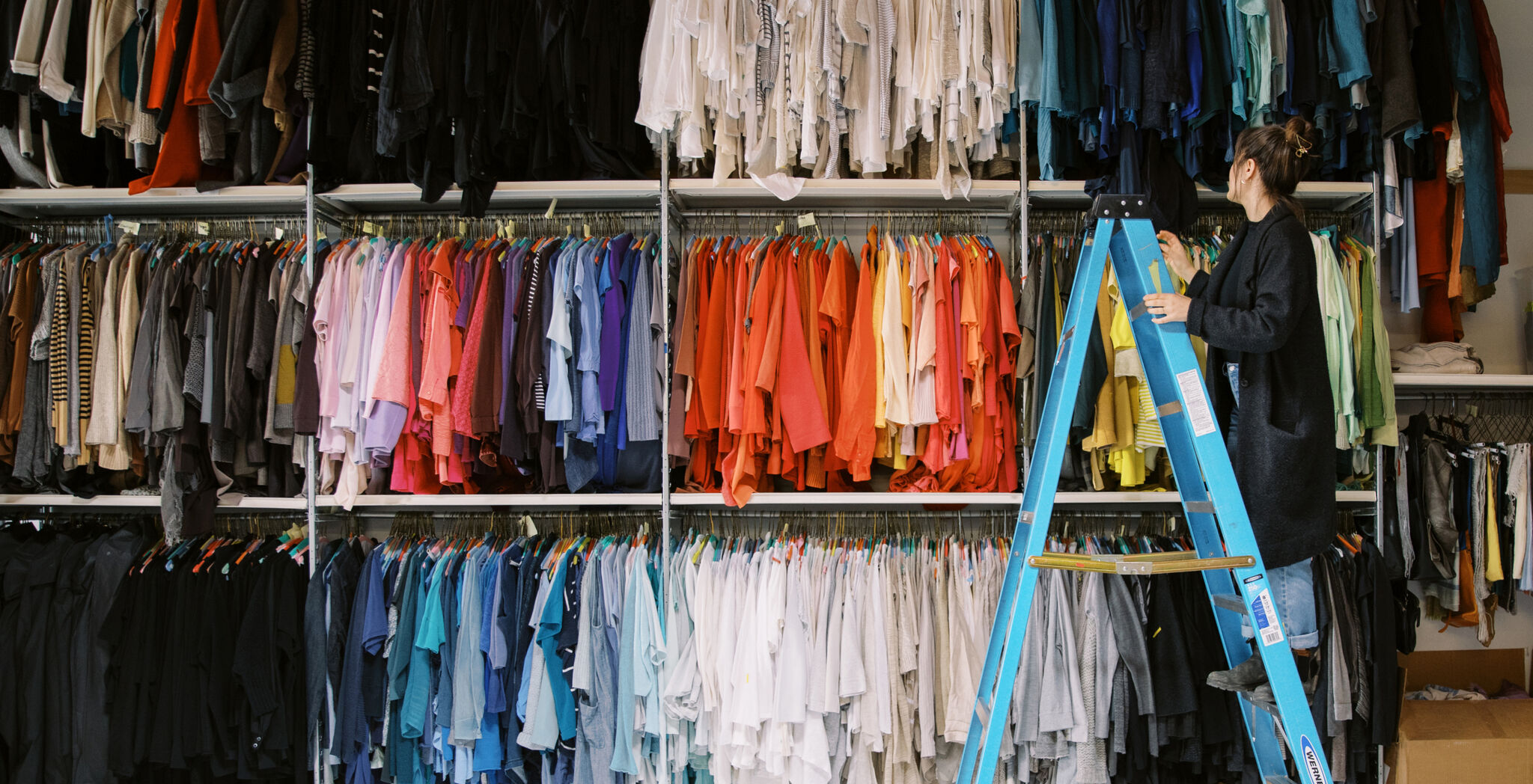
On a psychological level, Eileen Fisher and her team work to ensure customers find meaning in their clothing. “As manufacturers, we want to treasure the resources we’re using, to make clothing that lasts and can be repurposed. We want customers to value our clothes.” The Renew clothing collection programme takes the approach to circularity one step further. Established in 2009, and paying customers five dollars per returned Eileen Fisher garment no matter the condition, the programme had collected over one million garments by 2019.
Credit: Eileen Fisher
The collected garments are sorted — checking for wear, stains, and holes — and then washed, and where necessary repaired, re-dyed, or reworked. Then, they are sold for a percentage of the original price. This programme not only reduces the environmental impact of old clothing, but also brings in an additional US$3 million in annual sales, proving that repurposing garments can also be profitable. To take this one step further and encourage a conversation about overconsumption with the public, Eileen Fisher and her team created Waste No More, a project that uses salvageable scraps from the clothing collection programme and creates homeware, art, and other non-traditional uses for textile waste. The art pieces have been part of a travelling exhibition in the United States, France, and Italy, and continues to inspire the public to think twice before throwing textiles away.
The requiem of ‘Cradle-to-Grave’
The brand has transformed from a linear ‘cradle-to-grave’ production system to a circular model that has created an active community of conscious customers and artisan makers. The company’s forward-thinking business model proves that closed-loop design is both possible and profitable, and that garments are not static, but are valuable resources that can be transformed over time if the physical quality allows.
About the Contributor
American designer Eileen Fisher started her namesake womenswear brand in 1984, when she was working as an interior and graphic designer and had trouble finding clothes. She was inspired by timeless pieces like the kimono, leading to an ‘aha’ moment: a system of shapes that made dressing effortless. Today, that idea has evolved into a circular design approach that considers the entire lifecycle of clothing, from creation to reuse, and prioritises resource sustainability and the well-being of everyone involved.