Case Study
Tracing Fashion: Making Materials and Supply Chains Visible
Created by
Redress
Quick Access
Learn more fashion industry terminology from the Glossary.
Quick Access
Learn more fashion industry terminology from the Glossary.
A designer receives two fabric swatches. Both have the right feel, colour, and performance, and both suppliers describe their fabrics as responsibly sourced. But can either supplier show where the fibres came from, which factories handled them, or what evidence supports the claim? What can the designer establish from the information provided, and what else should they ask before making a decision?
A finished garment may have passed through numerous companies before reaching the brand that sells it. Raw materials are turned into fibres, yarns, and fabrics, then dyed, finished, and sewn — potentially across different countries. Each business may hold part of the information, while the designer or buyer sees only the fabric and its accompanying, usually short, description.
As fashion moves towards more responsible and circular practices, reliable information about a garment’s materials and production can inform decisions throughout its lifecycle. It can help designers assess material choices and substantiate specific claims, while information about composition and construction can also support repair, reuse, and recycling.
Two connected concepts are central to this: traceability helps follow materials and products through the supply chain, while transparency makes relevant information available to the people who need it. Used together, they can strengthen accountability. 1
Did You Know?
The EU has identified textile apparel as a priority for future rules under its Ecodesign for Sustainable Products Regulation (ESPR), including Digital Product Passports that would make specified product information easier to access. Detailed requirements for textiles are not yet final; the relevant EU delegated act is currently planned for adoption in Q4 2027, with implementation measures to follow. 2
This case study explores how traceability and transparency work in fashion supply chains, what different approaches can reveal about materials and suppliers, and where their limitations lie. Through industry examples and practical sourcing scenarios, it shows how designers can use this information to evaluate material claims, ask more informed questions, and make better-supported decisions during product development.
Why Traceability Matters in Fashion
The challenge begins with the way fashion is produced. A garment’s materials may pass through fibre production, spinning, fabric manufacturing, dyeing, finishing, and assembly, with separate businesses responsible for each stage. Garment and footwear supply chains are highly fragmented, often involving multiple levels of suppliers.
A clothing brand may know the factory that sewed its garments but have less information about the mill that supplied the fabric or the producer of the original fibre. The supplier of a certified material may have records for some transactions but not necessarily for every fabric that leaves its factory. Without connected records, important details can become difficult to confirm.
This matters for more than marketing. Businesses need information to understand sourcing risks, check material claims, and make informed decisions. The United Nations Economic Commission for Europe (UNECE) has developed guidance for the fashion industry through its Recommendation No. 46, outlining how supply-chain information can be collected and shared to improve traceability, transparency, and accountability. 1
Better information can also support a more circular fashion system. For example, a recycler deciding how to process a used garment benefits from knowing whether it is made from one fibre or a blend, while repairers may need information about components or construction. Having this information does not guarantee that a garment can be repaired or recycled, but it can help those responsible assess the available options.
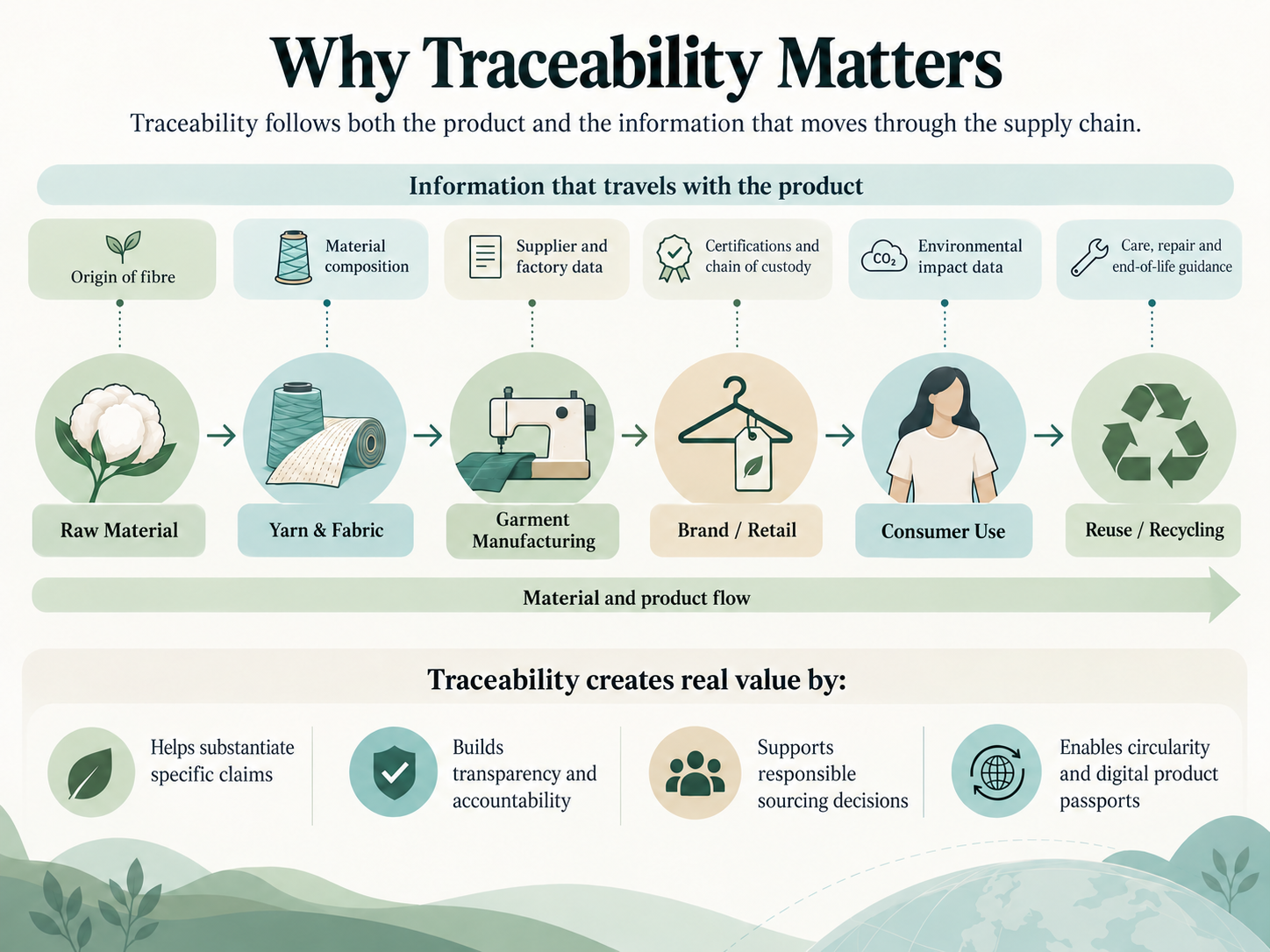
Figure 1 — Why Traceability Matters
Materials pass through several stages of production, generating information about their origin, composition, and processing. Traceability helps connect these records across the supply chain.
Source: Conceptual illustration informed by UNECE Recommendation No. 46 1 and Textile Exchange 4. Image credit: Redress, via ChatGPT
What Traceability and Transparency Mean
Traceability means following the journey. It involves recording the history of a material or product, including where it has moved and, where possible, how it has been processed. In a traceable supply chain, records can connect a particular viscose fibre to its producer and document its movement through spinning, fabric production and garment manufacturing.
Transparency means sharing relevant information. A brand might make a list of its production facilities publicly available, provide buyers with information about a material’s origin, or explain the evidence behind a product claim. Different information may be appropriate for suppliers, brands, regulators, and consumers.
The two are related, but they are not the same. A company may have detailed internal tracking records without sharing much publicly. Equally, publishing the names of garment factories does not, by itself, show which farms, forests, or fibre producers supplied every product.
How does a material claim stay connected to the material?
This is where ‘chain of custody’ and certifications come in.
Chain of custody is the controlled record of a defined material as it passes between businesses and through processing. Imagine that a brand wants to use certified material in a garment. The spinner records the certified fibre it receives and the yarn it produces; the fabric mill records the yarn received and the fabric supplied; and the garment manufacturer keeps the records needed to support any claim about the finished garment. The exact requirements depend on the certification scheme and the claim being made.
Textile Exchange’s Content Claim Standard (CCS) is one recognised framework for tracking certified materials. It uses documented procedures and independent checks to support claims about certified material content. A scope certificate shows that an organisation is certified for relevant activities, while a ‘transaction certificate’ relates to the movement of eligible material between businesses. 4
Certification answers a defined question: whether specified requirements have been met. Traceability follows the journey; transparency determines what is communicated about it.
Why It Matters for Fashion Designers
Designers are often involved in selecting materials and defining requirements for fibre content, fabric composition, finishes, and trims early in product development. These decisions influence not only the finished design but also the information a brand needs from its suppliers.
Return to the two fabric swatches from the beginning. Both suppliers describe their fabrics as ‘responsibly sourced’, but the information they provide differs. Supplier A offers only a brief description, while Supplier B identifies the fibre producer, explains the specific material claim, and provides supporting documentation.
Before choosing, the designer could ask: What exactly does ‘responsibly sourced’ mean in each case? Which stages of production does the evidence cover? Can the documentation be linked to the fabric being supplied?
Supplier B provides more information to assess, rather than simply a broader claim. The designer can consider this evidence alongside the fabric’s performance, suitability, and cost to make a more informed decision. They do not need to audit factories themselves, but can work with suppliers and sourcing teams to clarify any gaps in the information.
Considering product information early can also support circular design. A garment’s fibre composition and construction can influence how easily it can be repaired, sorted, or recycled, while clear care information can help extend its useful life. Recording these details during development makes them easier to share when needed.
Industry Examples and Emerging Approaches
Fashion businesses are adopting different approaches to trace materials, verify their origins, and share information across supply chains. Some systems connect digital records between suppliers, and others use physical markers to identify fibres within materials, while transparency platforms make selected supply-chain information publicly accessible.
These approaches serve different purposes, and understanding how they work together helps explain their role in more responsible and circular fashion systems.
Industry in Practice: How Lenzing Uses TextileGenesis
Consider a garment made from viscose: a fibre produced from cellulose, usually sourced from wood. Before becoming a finished garment, the fibre may pass through several businesses, including spinning mills, fabric mills, and garment manufacturers. By the time a brand receives the finished product, how can it confirm that the fabric contains the fibre it originally intended to source?
Lenzing, an Austrian manufacturer of wood-based cellulosic fibres, uses digital traceability technology to improve visibility of its branded fibres, including LENZING™ ECOVERO™ viscose.
One of its tools is TextileGenesis, a digital traceability platform originally developed as an independent company and now majority-owned by the French technology group Lectra. 11
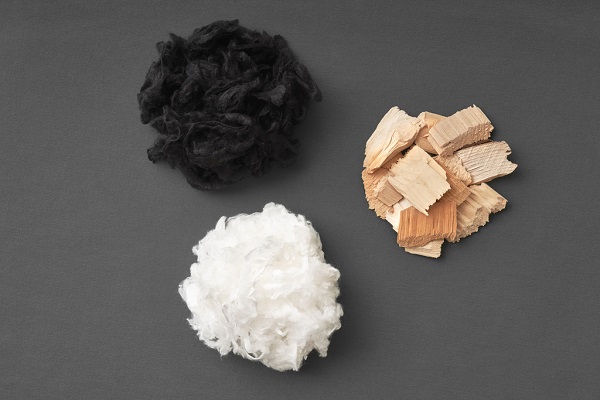
Image 3: Lenzing — Wood chips and fibre samples
Wood-based raw materials and textile fibres illustrate the connection between fibre sourcing and textile production.
Credit: © Lenzing AG / Photographer: Base Creative
How does this work in practice?
Imagine Lenzing supplies viscose fibre to a spinning mill. The mill turns it into yarn, which is then supplied to a fabric producer and eventually made into a garment.
As materials move between participating businesses, TextileGenesis connects digital records of the quantities received, processed, and transferred. This allows companies to trace the documented movement of materials through production, including backwards from finished products to participating suppliers. The platform tracks material quantities and transactions rather than individual fibres. 10
Lenzing’s overall approach brings together three complementary elements:
Digital traceability — TextileGenesis: Connects material records between participating suppliers, as outlined above.
Physical fibre identification: Lenzing uses identification technology to help verify whether its branded fibres are present in fabrics or garments. For example, LENZING™ ECOVERO™ viscose fibres contain a special marker that can be detected through specialist testing, rather than an ordinary phone scan.
Fabric certification and product labelling — E-Branding Service: Enables fabric producers to apply for certification and fashion brands to obtain permission to use Lenzing trademarks on eligible products. 6,7
What does this mean for a designer?
Imagine a designer developing a blouse using fabric that the supplier claims contains LENZING™ ECOVERO™ viscose. How can they check this claim, and what can they communicate about the material?
Step 1 — Fabric certification
The fabric producer can apply for Lenzing certification, providing the required information and fabric samples for testing. Lenzing assesses whether the fabric meets its requirements, including verifying the presence of its branded fibres. Once certified, the fabric producer receives a certification number.
Step 2 — Checking the material claim
The designer can request the certification details from their fabric supplier and check that the documentation relates to the material being purchased. This helps them assess the supplier’s claim without needing to operate a traceability platform or apply for a product licence themselves.
Step 3 — Using Lenzing branding (optional)
If the fashion brand selling the blouse wishes to use the LENZING™ ECOVERO™ trademark on its garment label or hangtag, it must apply for a separate product licence through Lenzing’s E-Branding Service, using the relevant fabric certification number. Permission is granted once Lenzing approves the application.
Designers working for a fashion brand would typically coordinate with their sourcing or product development teams. Independent designers can begin by requesting certification details from their fabric supplier and decide whether they also wish to apply for permission to use Lenzing’s branding.
Access to traceability platforms and related certification or branding services may involve different costs and arrangements, depending on the provider and the businesses involved.
A real-world example: ARMEDANGELS
In 2020, fashion brand ARMEDANGELS collaborated with Lenzing, Schneider, and TextileGenesis on traceability pilots covering 45 garment styles across supply chains in six countries. The project demonstrated how digital records could be linked to physical fibre shipments to help trace materials through production. 7
ARMEDANGELS continues to list TextileGenesis among its traceability partners, demonstrating its broader commitment to improving visibility of material origins and production processes. Explore ARMEDANGELS’ certifications and partners.
For designers, the key lesson is that traceability information and certification can help them assess and substantiate material claims, whether or not they choose to use a fibre producer’s branding. 6,7,10
Other Approaches: Physical Fibre Identification
While digital platforms connect information between suppliers, some technologies allow businesses to check the material itself.
For example, FibreTrace uses identifiable pigments embedded into textile fibres. These can be detected with scanning equipment during different stages of production, helping verify the presence of the marked fibre. 8 This provides an additional layer of identification alongside the documents and records describing a material’s journey.
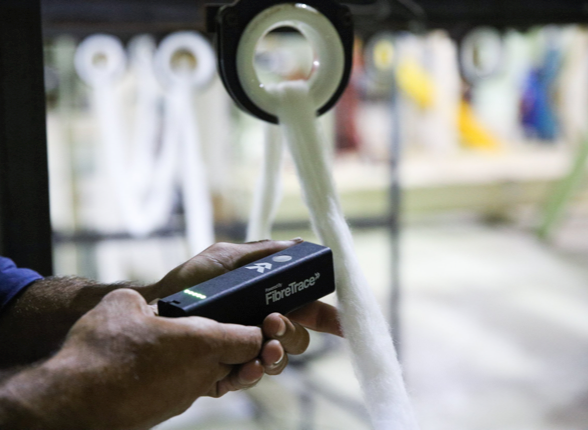
Image credit: FibreTrace
Transparency in Practice: Sharing Supply-Chain Information
Collecting supply-chain information is only one part of the process. Transparency is about making relevant information available to others.
For example, Open Supply Hub provides a publicly accessible database of production facilities, including garment factories, textile mills, and processing facilities.
Brands, organisations, and other users can share, search, and access information about manufacturing locations and their connections with different businesses. 9 The platform makes production locations visible rather than tracing the fibres within individual garments.
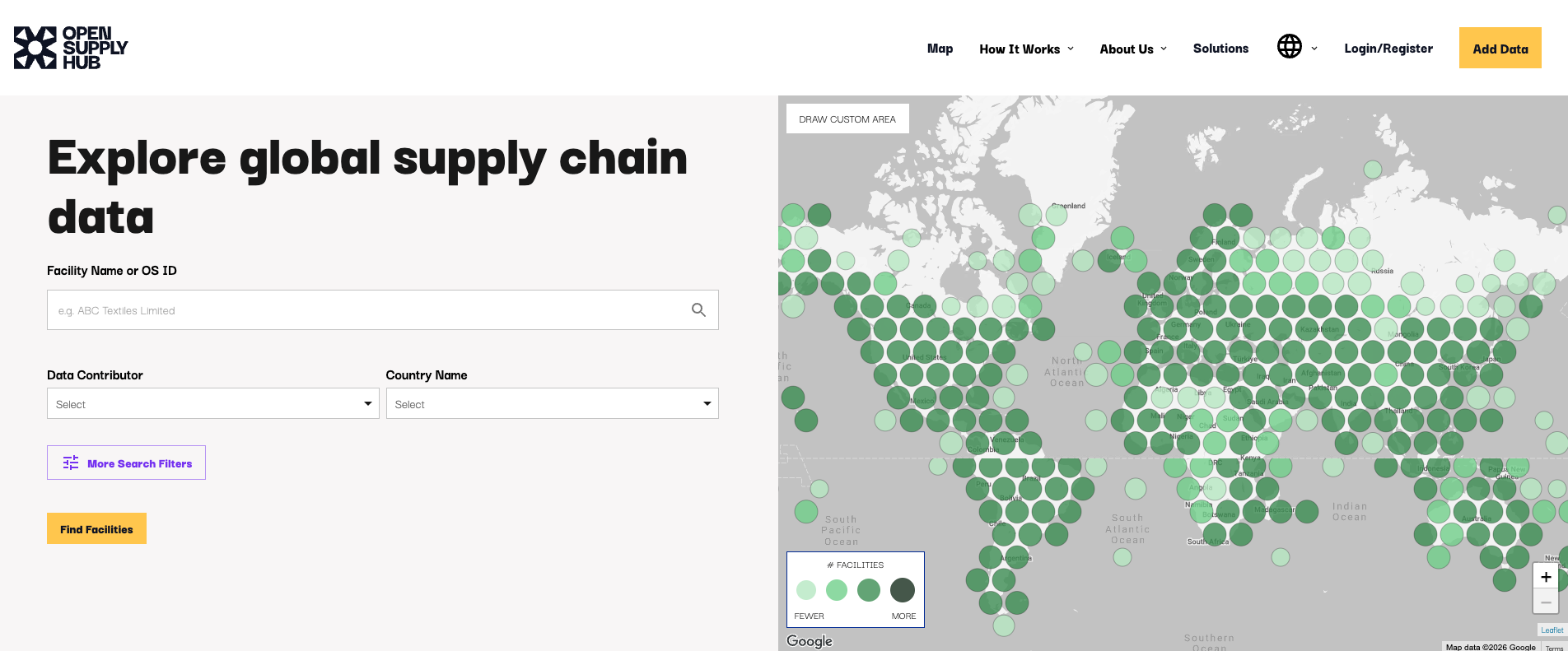
Image 5: Open Supply Hub — Platform screenshot
Open Supply Hub’s searchable global map makes information about production facilities publicly accessible, helping users identify and explore supply-chain locations.
Image credit: Open Supply Hub
Digital Product Passports: Connecting Information to Products
Digital Product Passports (DPPs) aim to make information about a product more accessible throughout its lifecycle. For example, a QR code on a garment label could link to details about its materials, origins, and care.
An example in practice: Save The Duck
Save The Duck uses a Digital Product Passport, supported by Certilogo, to give customers access to product information, including details of a garment’s journey through its supply chain and care instructions. Explore Save The Duck’s Digital Product Passport initiative.
This illustrates how information collected during production can become accessible to the people buying and using a garment.
DPPs are also part of the European Union’s wider Ecodesign for Sustainable Products Regulation (ESPR), introduced earlier. The specific EU requirements for textiles are still being developed. 2
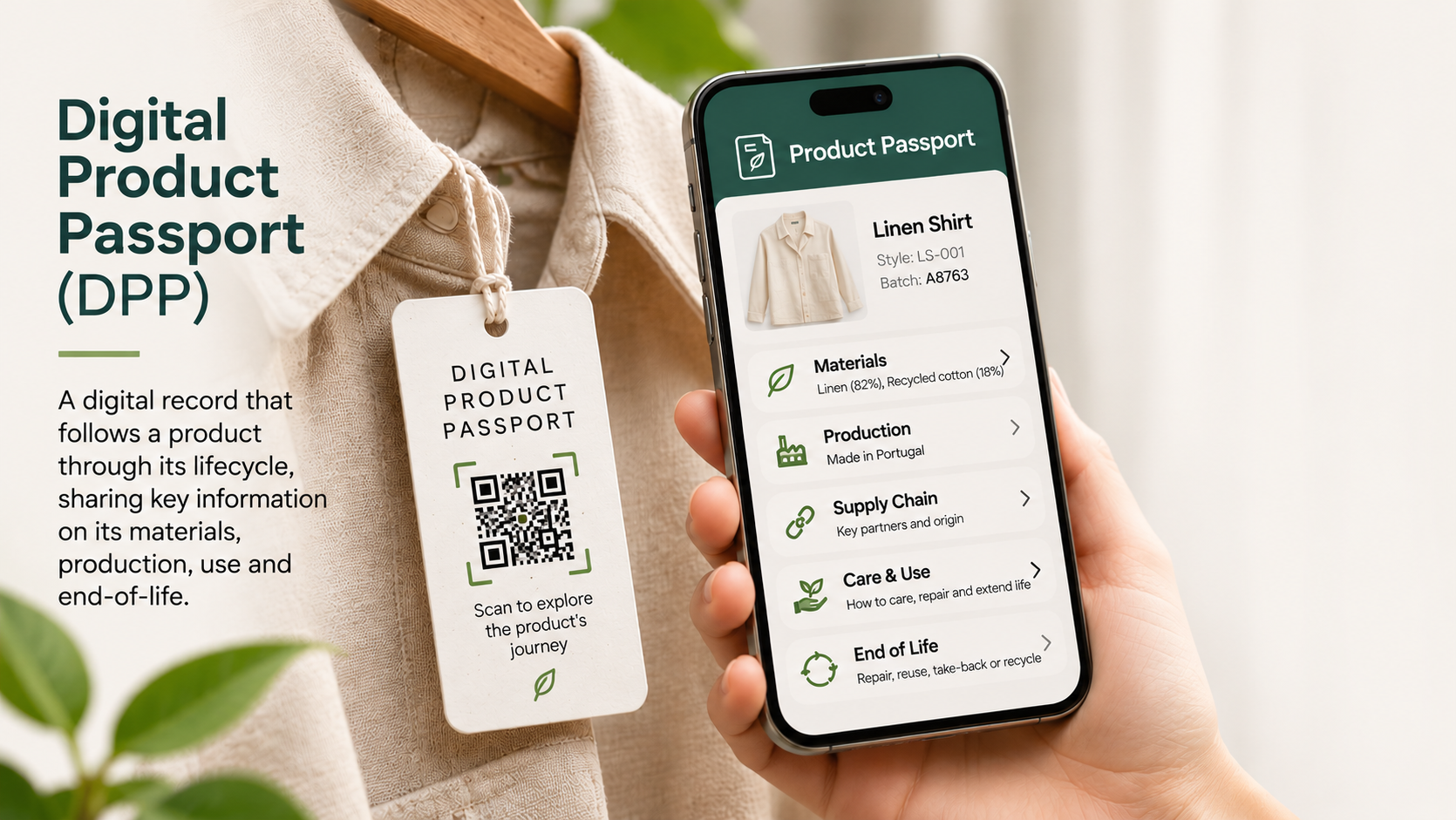
Image credit: Redress, via ChatGPT
Key Design Takeaways
Traceability and transparency give designers more than information about where materials come from. They provide a stronger basis for making material choices, assessing supplier claims, and considering what happens to a garment throughout its life.
What can designers start doing?
- Make more informed material choices. When comparing fabrics, consider not only their appearance, performance, and cost, but also the information suppliers can provide about their origin and production. What questions would you ask before making a decision between your fabric swatch options?
- Ask for evidence behind material claims. If a supplier describes a fabric as responsibly sourced, recycled, or certified, ask which standard, certification, or documentation supports that claim, and which stages of production it covers.
- Understand what is known about the supply chain. Find out which producers, mills, or manufacturing facilities are identified, where information is missing, and what further details could help inform sourcing decisions.
- Record useful information during product development. Keep relevant details about fibre composition, suppliers, certifications, finishes, components, and care requirements. This information may be useful for product communication, future Digital Product Passports, and other purposes.
- Consider the garment’s next life. Think about how fibre blends, trims, construction, and care information may affect durability, repair, reuse, and recycling. Better product information can help support these decisions from the design stage onwards.
Making information meaningful
The value of traceability and transparency depends on the quality and relevance of the information available. Knowing where a material came from does not automatically establish its environmental or social performance, and published supplier information may not cover every production stage. Understanding these limitations helps designers ask better questions and use the available evidence responsibly.
As fashion moves towards more circular systems, designers have an opportunity to make information part of the design process, alongside creativity, functionality, and material expertise.
Traceability helps build the record; transparency helps people use it.
What would you do differently as a designer if you had this information?
Footnotes
1 UNECE (2022), *Recommendation No. 46: Enhancing Traceability and Transparency of Sustainable Value Chains in the Garment and Footwear Sector*. https://unece.org/trade/publications/recommendation-no46-enhancing-traceability-and-transparency-sustainable-value
2 European Commission, *Textile Apparel and the Digital Product Passport* (accessed October 2026). https://single-market-economy.ec.europa.eu/single-market/digital-product-passport/textile-apparel_en
3 OECD (26 February 2026), *Due diligence essentials for responsible garment and footwear*. https://www.oecd.org/en/publications/responsible-business-conduct-spotlights_03a75bf9-en/due-diligence-essentials-for-responsible-garment-and-footwear_c7ae4e4a-en.html
4 Textile Exchange, *The Content Claim Standard (CCS)*. https://textileexchange.org/content-claim-standard/
5 Textile Exchange, *Manmade Cellulosic Fibers* (glossary). https://textileexchange.org/glossary/manmade-cellulosic-fibers-mmcs/
6 Lenzing Group, *Annual and Sustainability Report 2024*, Transparency: Strategy and Actions (company reporting). https://reports.lenzing.com/annual-and-sustainability-report/2024/sustainability/governance-information/transparency/strategy.htm
7 Lenzing Group (26 August 2020), *Lenzing creates unprecedented level of traceability* (company press release). https://www.lenzing.com/newsroom/news-events/lenzing-creates-unprecedented-level-of-traceability/
8 FibreTrace, *How it works* (company description). https://www.fibretrace.io/
9 Open Supply Hub, *Public supply-chain mapping and supplier-data resources*. https://opensupplyhub.org/ ; https://info.opensupplyhub.org/faqs
10 Lectra (updated 11 May 2026), A One-Stop Digital Traceability Platform for the Fashion Supply Chain. Explains TextileGenesis’s digital traceability system, including fibre-forward and product-backward tracking.
11 Lectra, 2023 Annual Financial Report, p.9, and Quarterly Financial Information at March 31, 2026, p.23. Documents TextileGenesis’s ownership history, including Lectra’s majority acquisition in 2023 and its increased shareholding of 75.3% in March 2026.